Financial literacy · Inflation and purchasing power
Your Balance Grew—but Did Its Purchasing Power? Nominal vs Real Return
A practical way to separate growth in the number from growth in what it can buy, with a fictional example, an exact formula, and a product-neutral checklist.
Two numbers answer different questions
Nominal return describes the change in the money amount: if SAR 10,000 becomes SAR 10,400 after a year, nominal growth is 4%. Real return asks whether purchasing power grew after prices changed. A balance can rise while buying the same basket becomes harder.
This distinction is a reading tool, not a verdict on a product. Fees, taxes, risk, liquidity and contract terms are separate and vary by jurisdiction, product and circumstance.
The shortcut helps; the exact formula is clearer
For small rates, real return can be approximated by subtracting inflation from nominal return, as the European Central Bank explains. A more exact calculation is: (1 + nominal return) ÷ (1 + inflation) − 1.
Fictional example: 4% nominal growth and 3% inflation. Subtraction gives about 1%; the exact formula gives about 0.97%: 1.04 ÷ 1.03 − 1. The gap is small here and widens at larger rates. These figures are not a market quote or an available product return.
- Convert percentages to decimals before calculating.
- Use the same time period in numerator and denominator.
- Do not mix an annual return with a monthly price change.
- State whether the result is before or after fees and taxes.
Use a shopping basket, not only an abstract percentage
Imagine a fictional household basket that cost SAR 1,000 at the start of the year. If its average price rises 3%, it costs SAR 1,030. If SAR 1,000 grows nominally by 4% to SAR 1,040, only SAR 10 remains beyond the basket—not SAR 40 of extra purchasing power.
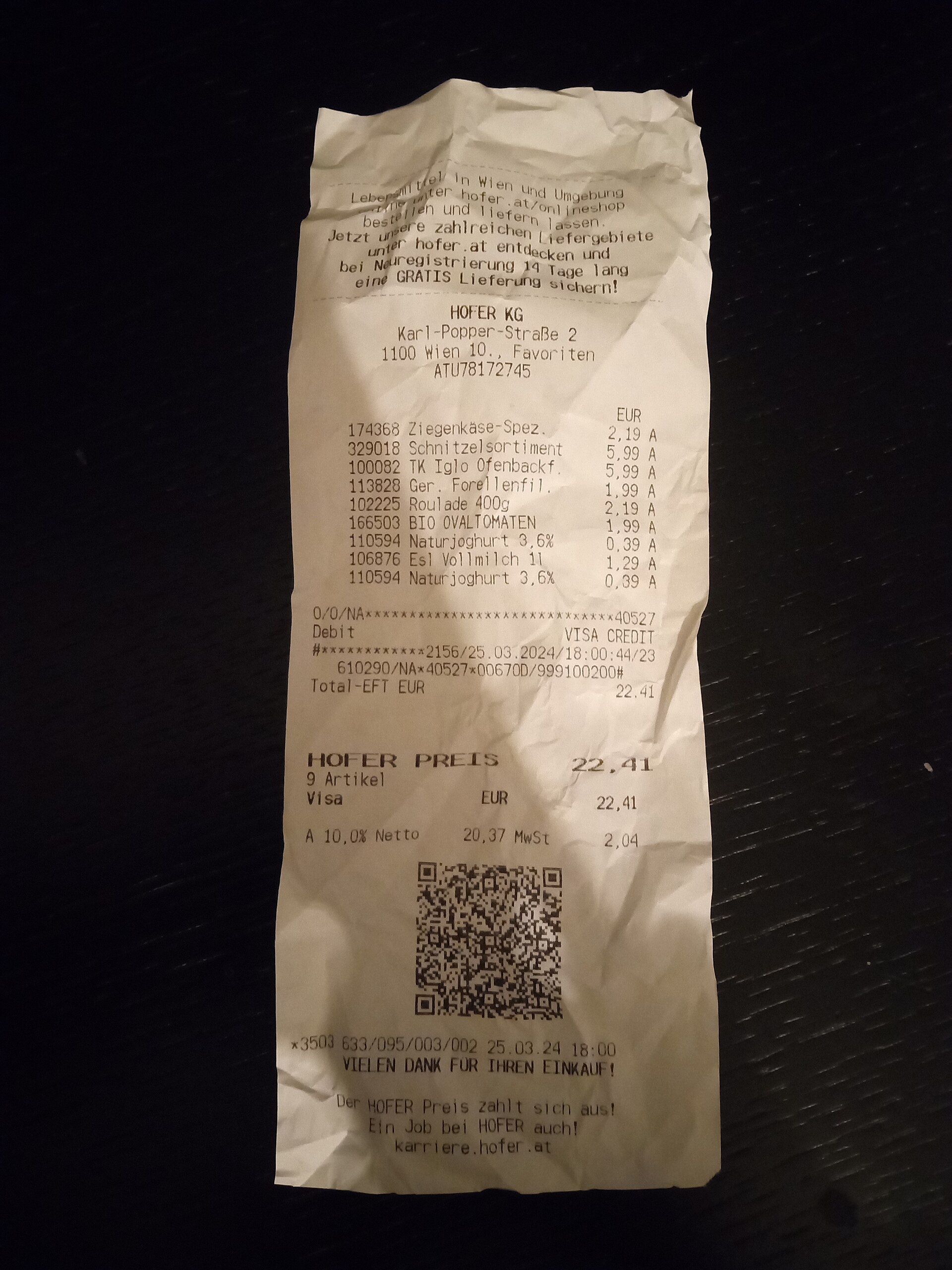
The photographed receipt is visual evidence that prices belong to specific goods, dates and places; it does not prove anyone's inflation rate. For a practical comparison, keep a consistent sample of essential purchases while protecting payment and personal data.
The CPI is not your personal bill
Saudi Arabia's General Authority for Statistics defines the Consumer Price Index as a statistical measure of price changes in a fixed basket of goods and services. It is a population index with specified weights, not a duplicate of every household's spending. Rent, transport and food patterns can make individual experiences differ.
Use the official index for the broad context and your spending records for your own experience. Do not substitute one for the other or select a single month because it supports a preferred story.
Checklist before comparing any return
A sound comparison aligns definitions and periods, then exposes what it leaves out.
- Are all figures measured over the same period?
- Is the return nominal, or after fees and taxes?
- Is inflation an official context measure or a personal-basket change?
- Is principal or return guaranteed? Never infer that from an example.
- Might you need the money soon? Liquidity and risk are separate questions.
- Is the source live or historical? Record the check date.
Bottom line: ask what the number can buy
A larger balance does not tell the whole story. Record nominal growth, adjust it for inflation over the same period, then consider fees, taxes and risk separately. The goal is not to chase the highest number, but to read outcomes through purchasing power and data limits.
Official sources and scope
- Saudi General Authority for Statistics — CPI Methodology and Quality Report
- European Central Bank — nominal and real interest rates
- Investor.gov — real return definition
- Grandmaster Huon / Wikimedia Commons — grocery receipt and CC0 record
Checked 20 October 2026 against GASTAT's CPI methodology, the European Central Bank explainer, and Investor.gov. No live inflation figure is used, and no account, deposit or security is recommended.