Fees and payments · Spending abroad
Paying Abroad: Local Currency or Your Card’s Home Currency?
A practical guide to dynamic currency conversion, comparing the terminal offer with your card’s exchange rate and fees without assuming one choice is always cheaper.
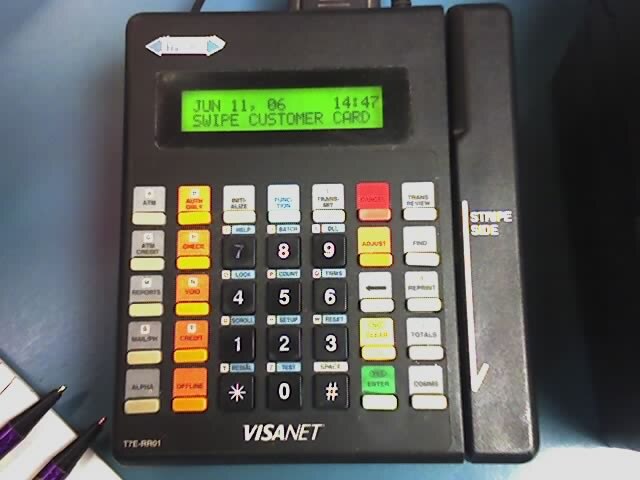
The terminal is offering two different conversion paths
When a terminal shows the purchase in local currency and again in riyals or your card currency, the second option is often dynamic currency conversion (DCC). The merchant's DCC provider converts the amount immediately and should disclose its rate and any markup or fee.
Choosing the country's local currency leaves conversion to the card network and issuer under your card agreement. That route is not necessarily free: your issuer may use an exchange rate and apply an international-purchase fee. The useful question is not which button is always right, but which final cost you can compare.
What should a DCC offer show?
Visa says a DCC screen or receipt should display the transaction in both currencies, both currency symbols, the conversion rate and any additional fee or markup. You should be free to accept or decline; the merchant or ATM should not choose for you. Visa advises declining the conversion and contacting the issuer if the required details are missing or you feel pressured.
These are network operating expectations, not proof that every terminal will be clear. Keep the receipt if safe, but never photograph a PIN, verification code or full card number.
- Purchase amount in local currency.
- Amount in the cardholder currency.
- The rate used for conversion.
- Any fee or markup.
- A clear accept-or-decline choice.
Saudi rules add issuer disclosure
Saudi Central Bank rules require a riyal-issued card to use SAR as the basis for calculating and disclosing transactions. International transaction notices must include the exchange rate and international-purchase fee, and issuers must provide an estimated international-transaction calculator covering the rate and fee while warning that the estimate may change.
Article 48 caps the international-purchase transaction fee for individual credit cards at 2% of the transaction amount, excluding VAT. That cap belongs to the stated rule and product scope; do not assume it describes a debit card or a card issued elsewhere. Check your issuer's disclosure and calculator on the purchase date.
Fictional example: do not compare SAR 425 with zero
Suppose a purchase is EUR 100 and the terminal offers either EUR 100 or SAR 425 through DCC. SAR 425 is a quoted DCC total, but it does not reveal the final cost of selecting euros. For that path you need the issuer's estimated rate, international-purchase fee and applicable tax.
Compare total with total at the same time. The illustration is not a live exchange rate, and the final posted amount may differ from an estimate if rates move between authorization and posting.
- Record the local-currency amount.
- Record the DCC total and markup.
- Use the issuer's official calculator or fee table.
- Compare totals, not rate labels alone.
- Keep the receipt until the transaction posts.
A terminal-side checklist
Read the currency beside the amount before confirming; do not rely on button colour or words such as “guaranteed.” If the DCC disclosure is incomplete, Visa's guidance is to decline the conversion, then review the transaction notice and statement.
If the posted amount is unauthorized or differs from what you approved, use the issuer's official dispute channel. This article cannot determine a dispute outcome or replace the card agreement.
- Can I see both currencies?
- Can I see the rate and markup?
- Do I know my card's international fee?
- Does the receipt match my selection?
- Have I protected card and PIN data?
Bottom line: compare who performs the conversion
The choice is essentially between conversion providers and disclosed costs. DCC quotes an immediate card-currency amount; local currency leaves conversion to the network and issuer. There is no personal answer that fits every card and transaction. Use the displayed figures, official calculator and fee disclosure to compare the total calmly.
Official sources and scope
- Saudi Central Bank — Rules of Issuance and Operation of Credit Cards
- Saudi Central Bank — Article 46, international-transaction calculator
- Saudi Central Bank — Article 48, fees and maximums
- Visa — Dynamic Currency Conversion consumer explainer
- Wikimedia Commons — photograph and public-domain record
Checked 27 October 2026 against the in-force Saudi Central Bank credit-card rules and Visa's DCC explainer. General education only; no card, bank or exchange rate is assessed.